Links
Important Dates
Last date for full Submission Deadline:
April 30, 2027
Last date for full Notification of Acceptance:
May 31, 2027
Last date for full Camera Ready Submission:
June 30, 2027
Contact Us
Conference Secretary
gaii@acamail.org
General Chair
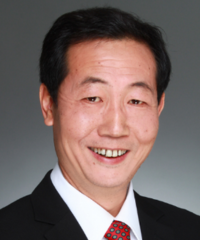
Shiqian Wu
Professor, Wuhan University of Science and Technology, China.
Research Interests: Computer vision, image processing, pattern recognition, intelligent robotics and artificial intelligence.
Prof. Shiqian Wu received the B.Eng. and M.Eng. degrees from the Huazhong University of Science and Technology (HUST), Wuhan, China, in 1985 and 1988, respectively, and the Ph.D. degree from Nanyang Technological University, Singapore in 2001. He is currently a full Professor with School of Information Science and Engineering; Director, Hubei Province Key Laboratory of Intelligent Information Processing and Real-Time Industrial Systems, Deputy Director, Institute of Robotics & Intelligent Systems (IRIS), Wuhan University of Science and Technology, Wuhan. From 2000 to 2014, he was a Research Fellow / Research Scientist with the Agency for Science, Technology and Research (A-STAR), Singapore. He has co-authored two books and more than 260 scientific publications (book chapters, journal/conference papers). He was listed as Most Cited Chinese Researchers in 2014~2021 by Elsevier. Prof. Wu is a senior member of the International Electrical and Electronics Association (IEEE) and has served as an editorial board member of Scientific World Journal, a member of the IEEE Technical Committee on Multimedia Communications and has served as conference chair and technical committee chair of many international conferences. He has been a member of the editorial board of Scientific World Journal, a member of IEEE Technical Committee on Multimedia Communications, and has been the chairman of many international conferences and technical committees. He is a reviewer for many international journals, such as IEEE Trans. His research interests include computer vision, image processing, pattern recognition, intelligent robotics and artificial intelligence.
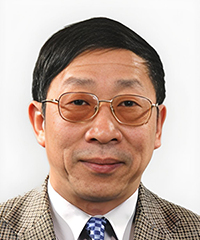
Huosheng Hu
Professor, University of Essex, UK.
Research Interests: AI and robotics, intelligent systems and autonomous mobile robots, IOT, smart sensors, genetic algorithms.
Huosheng Hu received his MSc degree in Industrial Automation from Central South University, China, and his PhD degree in Robotics from the University of Oxford, U.K. After conducting robotics research at Oxford for 9 years, he joined Essex University as a Senior Lecturer in 1998, and then Reader in 2001 and Professor in 2002. He is an Emeritus Professor in the School of Computer Science & Electronic Engineering at the University of Essex, United Kingdom since May 2025. His research interests span artificial intelligence, autonomous robots, human–robot interaction, embedded systems, mechatronics, data fusion, learning algorithms, and industrial automation. He has published more than 600 papers in journals, books, and international conferences, earning several Best Paper Awards. His publications have been cited over 22,712 times, with an H-index of 71 (Google Scholar), and he has been recognized among the world's top 2% most cited scholars (2020–2025). Prof. Hu is a Fellow of the Institute of Engineering & Technology, a Fellow of the Institute of Measurement & Control, a Life Senior Member of IEEE, and a founding member of the IEEE Robotics & Automation Society Technical Committee on Networked Robots. He has served as Program Chair and as a member of Advisory and Organizing Committees for numerous international conferences, including IEEE IROS, ICRA, ICMA, and ROBIO. He is currently Executive Editor of the International Journal of Mechatronics and Automation and has previously served as Editor-in-Chief of the International Journal of Automation and Computing and the MDPI Robotics Journal.
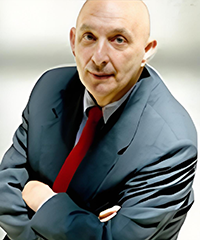
Sos Agaian
Distinguished Professor, City University of New York, USA.
Research Interests: Big and Small Data Analytics, Computational Vision and Sensing, Machine Learning and Urban Computing, Multimodal Biometric and Digital Forensics, Information Processing and Fusion, and Fast Algorithms, computer sciences.
Sos S. Agaian, PhD in Mathematics, Dr, Engineering Science, and is a Distinguished Professor of Computer Science at College of Staten Island and the Graduate Center, City University of New York (CUNY). Prior to joining CUNY, Dr. Agaian was the Peter T. Flawn Professor of Electrical and Computer Engineering at the University of Texas at San Antonio; Graduate School of Biomedical Sciences UTHSCSA at San Antonio; Professor, UT System Cyber and Cloud Security Initiative, and Director of Multimedia and Mobile Signal Processing Laboratory. He has been a visiting faculty at the Tufts University, the Tampere Institute of Technology, and the Leading Scientist at the AWARE, Inc. at Bedford, MA.
Dr. Agaian received his M.S. in Mathematics and Mechanics (summa cum laude) from the Yerevan State University, Armenia; his Ph.D. in Mathematics and Physics from the Steklov Institute of Mathematics, Russian Academy of Sciences (RAS); and his Doctor of Engineering Sciences degree from the Institute of Control Systems, RAS.
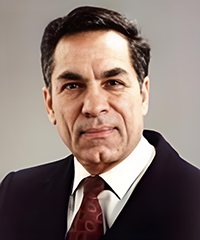
Om Parkash Malik
Professor, University of Calgary, Canada.
Research Interests: Adaptive and Artificial-Intelligence-Based Controllers for Application in Electric Power Systems, Parameter Estimation of Electric Machines, Failure Modelling of Power Transformers, Power System Protection, Particular.
Professor Om P. Malik has done pioneering work in the development of controllers for application in electric power systems and wind power generation over the past over 50 years. After extensive testing, the adaptive controllers developed by his group are now employed on large generating units. His other interests include digital protection, control of renewable power generation and micro-grids, and AI applications in power system control. He has published over 800 papers including over 410 papers in international Journals and is the coauthor of four books: (1) Electric Distribution Systems, (2) Power System Stability, (3) Power Grids with Renewable Energy, (4) Power System Stability and Control. Professor Malik graduated in 1952 from Delhi Polytechnic. After working for nine years in electric utilities in India, he obtained a Master Degree from Roorkee University in 1962, a Ph.D. from London University and a DIC from the Imperial College, London in 1965. He was teaching and doing research in Canada from 1966 to 1997 and continues to do research as Professor Emeritus at the University of Calgary. Over 100, including 54 Ph.D., students have graduated under his supervision. Professor Malik is a Life Fellow of IEEE, and a Fellow of IET, the Engineering Institute of Canada, Canadian Academy of Engineering, Engineers Canada and World Innovation Foundation. He is a registered Professional Engineer in the Provinces of Alberta and Ontario, Canada, and has received many awards. He was Director, IEEE Region 7 and President, IEEE Canada during 2010-11 and President, Engineering Institute of Canada, 2014-2016.
Co-Chair

Neil Gordon
Professor, University of Hull, UK.
Research Interests: flexible learning, technology-enhanced learning, gamification applied to learning, computer-based instruction.
Neil Gordon is a Senior Lecturer in Computer Science at the University of Hull in England. Neil is a National Teaching Fellow, and a Principal Fellow of the UK Higher Education Academy. He has produced a number of reports for AdvanceHE on developments in Higher Education, including the way that computer technology can enable flexible learning, the role of assessment in education, and ways to address issues in retention and attainment in computing education. His awards include University Teaching Fellowships and awards for scholarships in teaching and learning. He worked for some time as an Educational Technology Advisor, exploring and supporting the use of computer technology in teaching mathematics. The modules and degree programs he leads emphasize the combination of theory and practice, reshaping the talent cultivation model for computer science. In addition, as the senior academic leader of the Knowledge Transfer Partnership Program (KTP), he has promoted the deep integration of academia and industry, and facilitated the transformation of scientific research achievements into practical productivity. Neil is chair (2022 to present) of the British Computer Societies Ethics specialist group, and is a regular speaker on the topic of ethics and professionalism, sustainability and, more recently, the ethical implications of Generative AI. He has published over 50 journal articles, a similar number of refereed conference proceedings, and a variety of book chapters, reports and other publications.
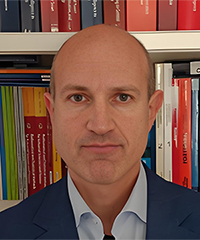
Danilo Pelusi
University of Teramo, Italy.
Research Interests: artificial intelligence; coding theory; implementation of signal processing and pattern recognition algorithms; fuzzy logic; neural networks and genetic algorithms.
He is a Full Professor of Information Processing Systems (IINF-05/A) in the Department of Communication Sciences. His research fields include artificial intelligence and coding theory. He also works on the implementation of signal processing and pattern recognition algorithms, fuzzy logic, neural networks, and genetic algorithms. He has obtained the national qualification as Full Professor in Computer Science (INFO-01/A).
Previously, he served as an Associate Professor (November 2019–October 2024) and as a Fixed-Term Researcher under Art. 24 c.3-b L. 240/10 (2016–2019) and L. 230/2005 (2009–2012) in Computer Science (INF/01) at the University of Teramo. He conducted research on optimization of control systems and database design at the Collurania “V. Cerulli” Astronomical Observatory in Teramo.
He is Editor of volumes published by Springer, Elsevier, CRC Press, and Wiley, and serves as Associate Editor for several journals, including IEEE Transactions on Fuzzy Systems, IEEE Transactions on Neural Networks and Learning Systems, IEEE Transactions on Intelligent Transportation Systems, IEEE Transactions on Emerging Topics in Computational Intelligence, IEEE Access, Array (Elsevier), and the International Journal of Machine Learning and Cybernetics (Springer). He is also a member of the Machine Intelligence Research Labs (MIR Labs).
He serves as Honorary Professor at the Ramco Institute of Technology, Rajapalayam (Anna University), and at the Rathinam Technical Campus, Coimbatore (Anna University), Tamil Nadu, India, and as Adjunct Professor of Computer Science at the School of Engineering and Technology of Shobhit University, Gangoh, India. He is also Honorary Professor at the Department of Computer Science & Engineering of Galgotias University, Greater Noida, Uttar Pradesh, India.
Recognized as a World’s Top 2% Scientist (2021–2024) and among the Top 0.5% in the 2024 ScholarGPS rankings, he is frequently invited as a Keynote Speaker and Guest of Honor at IEEE conferences, and he serves as Guest Editor for Special Issues of journals published by Elsevier, Springer, MDPI, AIMS Press, and Inderscience. He has been Chair of IEEE conferences, a member of editorial boards of various international journals, and a member of scientific committees of international conferences.
He is the inventor of several patents in artificial intelligence, a member of the Doctoral College in Economic and Social Sciences at the University of Teramo, and holds a Ph.D. in Computational Astrophysics. He earned his degree in Physics from the University of Bologna.
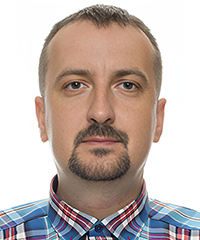
Adam Slowik
Associate Professor, Koszalin University of Technology,
Poland.
Research Interests: Computer Science, Artificial Intelligence, Soft Computing, Electronics, Digital Circuits.
Adam Slowik (Senior Member, IEEE) received the B.Sc. and M.Sc. degrees in computer engineering and electronics, in 2001, and the Ph.D. degree in electronics with distinction from the Department of Electronics and Computer Science, Koszalin University of Technology, Koszalin, Poland, in 2007, respectively, and the Dr. habil. degree in computer science (intelligent systems) from the Department of Mechanical Engineering and Computer Science, Czestochowa University of Technology, Czestochowa, Poland, in 2013.
Since October 2013, he has been an Associate Professor with the Department of Electronics and Computer Science, Koszalin University of Technology. He is an Author or Co-Author of more than 180 refereed articles in international journals, two books, and conference proceedings, including two invited talks. His research interests include soft computing, machine learning, neural networks, fuzzy systems, computational intelligence, bio-inspired optimization algorithms, and their engineering applications.
Dr. Slowik is a Reviewer for many international scientific journals. He was an Associate Editor for the IEEE Transactions on Industrial Informatics (2011-2025). He is an Associate Editor for the IEEE Transactions on Fuzzy Systems and IEEE Transactions on Cybernetics. He is a member of the program committees of several important international conferences in machine learning, artificial intelligence, and evolutionary computation. He received one Best Paper Award at the IEEE Conference on Human System Interaction in 2008. In 2022-2025, he was on the list of Top 2% Scientists Worldwide by Stanford University
Dr. Slowik has often organized special sessions in such journals as IEEE Transactions on Industrial Electronics, IEEE Transactions on Industrial Informatics, IEEE Transactions on Fuzzy Systems, IEEE Transactions on Consumer Electronics.
Organizing Committee Member
Aslina Baharum, Taylor's University, Malaysia
Chui Yin Wong, Taylor's University, Malaysia
João Manuel R. S. Tavares, Universidade do Porto, Portugal
Technical Committee Chair
Fursan Thabit, UCAS, China
Hamed Taherdoost, University Canada West, Canada
Luisa Maria Arvide Cambra, University of Almeria, Spain
Smain Femmam, UHA University, France
Zhao Zhang, Professor, Hefei University of Technology, China.
Technical Committee Member
A.B Feroz khan, Syed Hameedha Arts and Science College, India
Aarti Amod Agarkar, Vishwakarma Institute of Technology, India
Addisson Salazar, Universitat Politecnica de Valencia, Spain
Adrian David Cheok, Nanjing University of Information Science and Technology, China
Alessio Faccia, University of Birmingham Dubai, UAE
Ali H. Wheeb, University of Baghdad, Iraq
Andrew Csizmadia, Birmingham City University, UK
Chinthaka Premachandra, Shibaura Institute of Technology, Japan
Daehee Seo, Sangmyung University, Korea
Debao Zhou, University of Minnesota Duluth, USA
Duc Truong Pham, The University of Birmingham, UK
Ephraim Suhir, Portland State University, USA
Francesco Zirilli, Sapienza Universita Roma, Italy
Gajendra Sharma, Kathmandu University, Nepal
Galina Ilieva, University of Plovdiv, Bulgaria
Gheorghe Grigoras, "Gheorghe Asachi"Technical University Iasi, Romania
Grigorios N. Beligiannis, University of Patras – Agrinio Campus, Greece
Gyu Myoung Lee, Liverpool John Moores University, UK
Hao Ying, Wayne State University, USA
Hasmat Malik, Universiti Teknologi Malaysia, Malaysia
Hugo Morais, Universidade de Lisboa, Portugal
Janusz Kacprzyk, Polish Academy of Sciences, Poland
Javier Gozalvez, Universidad Miguel Hernandez de Elche, Spain
Jawwad Nasar Chattha, Norwich University of the Arts, UK
Jehad M. Hamamreh, Antalya Bilim University, Türkiye
Jing Zhang, Emory University, USA
K. Thamizhmaran, Government College of Engineering, India
K. Vasudevan, Indian Institute of Technology Kanpur, India
Kali Charan Rath, GIET University, India
Kuan Yew Wong, Universiti Teknologi Malaysia, Malaysia
Larbi Boubchir, University of Paris 8, France
Ljiljana Trajkovic, Simon Fraser University, Canada
Lu Leng, Nanchang Hangkong University, China
Mahmoud Reza Delavar, University of Tehran, Iran
Maki Habib, The American University in Cairo, Egypt
Marcin Paprzycki, Polish Academy of Sciences, Poland
Mario Molinara, University of Cassino and Southern Lazio, Italy
Md. Shamsul Arefin, Bangladesh University of Business and Technology, Bangladesh
Mihaela Popescu, University of Craiova, Romania
Mir Sajjad Hussain Talpur, Sindh Agriculture University, Pakistan
Mohamed Arezki Mellal, M'Hamed Bougara University, Algeria
Muazzam Ali Khan Khattak, National Academy of Artificial Intelligence, USA
Muhammad Firoz Mridha, American International University-Bangladesh, Bangladesh
Muhammad Usman, University of Science and Technology Beijing, China
Murat Tolga ÖZKAN, Gazi University, Turkey
Nebojsa Bacanin-Dzakula, Singidunum University, Srbija
Obradovic Zarema, University of Sarajevo, Bosnia and Herzegovina
Olarik Surinta, Mahasarakham University, Thailand
Omar Cheikhrouhou, University of Sfax, Tunisia
Pankaj Arora, Birla Institute of Technology & Science, India
Paola Barra, University of Naples Parthenope, Italy
Parikshit N. Mahalle, Dean Research and Development, India
Pascal Lorenz, University of Haute Alsace, France
Radu-Emil Precup, Politehnica University of Timisoara, Romania
Raffaele Di Gregorio, University in Ferrara, Italy
Raghu Para, Ford Motor Company, America
Raja Sarath Kumar Boddu, Lenora College of Engineering, India
Rao Li, University of South Carolina Aiken, USA
Raul Campilho, Instituto Superior de Engenharia do Porto, Portugal
Ravipudi Venkata Rao, S. V. National Institute of Technology, India
Riman Mandal, Galgotias University, India
Robert S Laramee, University of Nottingham, UK
Robert Wu, University of Technology Sydney, Australia
Rui Araújo, University of Coimbra, Portugal
S. Masoud Barakati, University of Sistan and Baluchestan, Iran
Sathishkumar V E, Sunway University, Malaysia
Seppo Sirkemaa, University of Turku, Finland
Seyed Mohammad Ayyoubzadeh, Tehran University of Medical Sciences, Iran
Shabir Ahmad Parah, University of Kashmir, India
Shashikant Patil, ATLAS SkillTech University, India
Siu-lun Lee, The Chinese University of Hong Kong, China
Sohaib Latif, Grand Asian University Sialkot, Pakistan
Sunday Adeola Ajagbe, University of Zululand, South Africa
Taha Elwi, Al-Mammon University College, Iraq
Tan Xiao Jian, Tunku Abdul Rahman University of Management and Technology, Malaysia
Tawseef Ayoub Shaikh, National Institute of Technology Srinagar, India
Thameur Dhieb, University of Sfax, Tunisia
Valentina Emilia Balas, Aurel Vlaicu University of Arad, Romania
Venkataramaiah Gude, Tech Mahindra (Americas) Inc, America
Venkatesan Chandrasekaran, Sri Venkateswara College of Engineering, India
Vesna Zeljkovic, Lincoln University, USA
Vijayan K. Asari, University of Dayton, USA
Vinayak Ashok Bharadi, Finolex Academy of Management and Technology, India
Xinguo Yu, Central China Normal University, China
Yilun Shang, Northumbria University, UK
Zainal Rasyid Mahayuddin, Universiti Kebangsaan Malaysia, Malaysia
Zhaohui Cen, Technology Innovation Institute, United Arab Emirates
Sponsors
University of Almeria
University of Teramo
Institute of Advanced Displays and Imaging, Henan Academy of Sciences