GAII 2027

Contact Us

Speakers

Links

Important Dates

Last date for full Submission Deadline:

April 30, 2027

Last date for full Notification of Acceptance:

May 31, 2027

Last date for full Camera Ready Submission:

June 30, 2027

Contact Us

Conference Secretary
gaii@acamail.org

Keynote Speakers

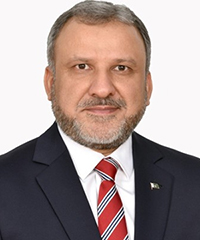
  • Muazzam Ali Khan Khattak

    Professor, National Academy of Artificial Intelligence, USA.

    Research field: Artificial Intelligence, Internet of Things, IoVs, IIoTs, Smart Cities, Information Security.

    Prof. Dr. Muazzam Ali Khan Khattak (Senior Member of IEEE, AAAI & Member Pakistan Academy of Sciences). Prof. Khattak (Member NADRA Authority Board) listed among top 2% highly cited scientists of the world in 2024 and 2025. He is recipient of Gold Medals from Pakistan Academy of Sciences-COMSTECH and IEEE Islamabad Section. Currently he is working for National Academy of Artificial Intelligence, USA. He is also Chairperson of UNESCO National IFAP Committee. Earlier he served as Associate Dean Computing and Head Postgraduate Program at SEECS, NUST. He received his postdoc from University of Missouri (UMKC), USA, and PhD in a sandwich from IIUI and University of Missouri (UMKC), USA and joined them as an adjunct Professor. He has published 03 books and 16 book chapters with renowned international publishers. Beside that he has more than 240 articles in reputed international journals and conferences, based on which he among highly cited scientists of the world total with citations of 6950 and h-index of 45. He has secured national and international research grants of Rs. 1.7 billion by the Ministry of Education, Kazakhstan, British Council, University of Missouri, USA, USAK University, Turkiye, and Margullan University, Kazakhstan. He is also a member of the International advisory boards at Texas American Muslim Universities (TEXAM), USA, USAK University, Türkiye, Baku State University, Azerbaijan, Xidian University, China, Member Senate MUST University, AJK and senior member of Pakistan Academy of Sciences. He is a master trainer in IPFP and train in the trainers' program by NAHE, Higher Education Academy, HEC Pakistan.
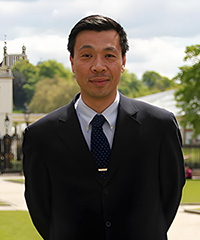
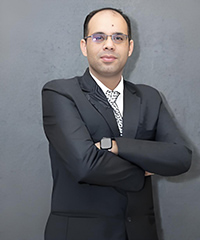
  • Jixin Ma

    Professor, University of Greenwich, UK.

    Research field: Artificial Intelligence, Data Science, Information Systems.

    Dr Jixin Ma is a Full Professor of Computer Science (Artificial Intelligence) in the School of Computing and Mathematical Sciences at University of Greenwich, U.K. He has been the Director of the Centre for Computer and Computational Science and the Lead of Artificial Intelligence Research Group, and the Director of PhD/Postgraduate Research Programme. Professor Ma is also a Visiting Professor of Beijing Normal University, Hainan University, Anhui University, Zhengzhou Light Industrial University and Macau City University. Professor Ma obtained his BSc and MSc of Mathematics in 1982 and 1988, respectively, and PhD of Computer Sciences in 1994. His main research areas include Artificial Intelligence, Data Science, and Information Systems, with special interests in Temporal Logic, Information Security, Machine Learning, Case-Based Reasoning and Pattern Recognition. Professor Ma has been a member British Computer Society, American Association of Artificial Intelligence, ACIS/IEEE, World Scientific and Engineering Society, and Special Group of Artificial Intelligence of BCS. He has also been the Editor of several international journals and international conference proceedings, Conference/Program Chair, and Invited Keynote Speakers of many international conferences. Professor Ma has published more than 200 research papers in peer-reviewed international journals and conferences.

  • Anand Nayyar

    Professor, Duy Tan University, Vietnam.

    Research field: Wireless Sensor Networks, Internet of Things, Swarm Intelligence, Cloud Computing, Artificial Intelligence, Drones, Blockchain, Cyber Security, Healthcare Informatics, Big Data and Wireless Communications.

    Professor Anand Nayyar is currently a Professor, Vice-Chairman (Research), and Director of the IoT and Intelligent Systems Laboratory at the School of Computer Science and Artificial Intelligence, Duy Tan University, Vietnam. He received his Ph.D. in Computer Science in 2017, with research interests spanning wireless sensor networks, swarm intelligence, artificial intelligence, the Internet of Things, cloud computing, blockchain, and health informatics. Professor Nayyar has an outstanding academic record, having published over 260 high-quality SCI/SSCI papers and authored or edited 83 books, with more than 25,000 Google Scholar citations and an h‑index of 81. He has been consecutively listed among the world's top 2% scientists by Stanford University for six years (2020–2025) and ranks second nationally in computer science in Vietnam. He holds numerous international patents, including 18 Australian patents, 16 German patents, and others, and serves as an Associate Editor for more than ten prestigious journals, including Computer Communications. He is a Senior Member of both IEEE and ACM, and also a Life or Senior Member of over 60 other academic associations. He has received 58 teaching and research awards, including the Obada Prize, the Lifetime Achievement Award, and the Distinguished Scientist Award from the National University of Singapore, among many others.

  • Li Cheng

    Professor, University of Alberta, Canada.

    Research field: Human Motion Analysis, Computer Vision, Machine Learning, Biomedical Image Analysis.

    Professor Li Cheng is a professor with the Department of Electrical and Computer Engineering, University of Alberta. He also holds an adjunct position with ASTAR, Singapore, where he has led a group in Machine Learning for Bioimage Analysis at the Bioinformatics Institute. Prior to joining the University of Alberta in 2018, he worked at ASTAR, Singapore, TTI-Chicago, USA, and NICTA, Australia. He received his BSc degree in Computer Science from Jilin University in 1996, his M.Eng. degree from Nankai University in 1999, and his PhD in Computing Science from the University of Alberta in 2004. His research expertise is mainly on computer vision and machine learning. He is a member of IEEE, ACM, and AAAI. He has supervised or co-supervised a number of research students and postdocs. Many of them have taken scientist or engineer positions at major tech companies (Google, Nvidia, Bosch, OmniVision, etc.) or hold faculty positions at prestigious universities (e.g., Southeast University of China, China University of Geosciences, University of Adelaide of Australia).

  • Vijay Bhaskar Semwal

    Assistant Professor, Maulana Azad National Institute of Technology, Bhopal.

    Research field: Bipedal Robotics, Gait Analysis, Human-Robot Interaction, Human-AI Collaboration, Edge AI, TinyML, IoHT, Machine Learning, IIoT, Neural Network-Based Learning, Deep Learning, Optimization, Natural Language Processing (NLP), Information Theory, Exploratory Data Analysis, and Fog & Cloud Computing.

    Dr. Vijay Bhaskar Semwal is currently Assistant Professor Grade‑1 in the Department of Computer Science and Engineering at MANIT Bhopal, having previously served at NIT Rourkela, IIIT Dharwad, and NIT Jamshedpur, with over 10 years of teaching and research experience. He received his Ph.D. in Robotics and AI from IIIT Allahabad. His research spans human‑robot interaction, IoT, wearable sensor‑based health monitoring, bipedal robotics, gait analysis, artificial intelligence, algorithmic perspectives on machine learning, and theoretical computer science, with applications in rehabilitation, healthcare, and intelligent control. He has published over 100 papers in SCOPUS/SCI‑indexed journals and conferences, serves as a reviewer for leading Elsevier/IEEE/Springer venues, and was awarded the DST‑SERB Early Career Research Award (₹25 lakhs). He has completed three projects worth ₹50 lakhs and currently leads three externally funded projects worth over ₹50 lakhs. He is a senior member of IEEE, IAENG, IAN, and SCRS, has delivered over 150 invited talks, and maintains international collaborations across Asia. He has supervised five Ph.D. scholars to completion and is currently guiding seven more, with research interests focused on AI, robotics, and cutting‑edge computer science applications.

  • Hamed Taherdoost

    Professor, University Canada West, Canada.

    Research field: Artificial Intelligence, Machine Learning, Intelligent Computing, Data Analytics, Cybersecurity, and Blockchain Technologies.

    Dr. Hamed Taherdoost is a Full Professor and Chair of the Research and Strategy Advisory Committee (RSAC) at University Canada West, and the founder of Hamta Business Corporation. He has over 20 years of experience spanning academia and industry, with expertise in artificial intelligence, cybersecurity, blockchain, information systems, digital transformation, technology adoption, and research methodology. He has published over 500 scientific articles, 70 book chapters, and authored or edited more than 50 books. His research contributions have been recognized through various international rankings and awards, including inclusion in the Stanford–Elsevier list of the world's top 2% scientists. Dr. Taherdoost has served as an editor, associate editor, guest editor, and reviewer for numerous international journals and publishers, including Springer, Taylor & Francis, Elsevier, Emerald, MDPI, and IEEE. He is also a senior member of IEEE and an active contributor to international research communities in information technology, cybersecurity, and intelligent systems.

  • Vijayan K. Asari

    Professor, University of Dayton, USA.

    Research field: Signal processing, Image processing, Computer vision, Pattern recognition, Machine learning, Artificial neural networks, High performance and low-power digital architectures.

    Dr. Vijayan Asari is the University of Dayton Ohio Research Scholars Endowed Chair in Wide Area Surveillance and a Professor with the Department of Electrical and Computer Engineering at the University of Dayton, and Director of the Center of Excellence for Computational Intelligence and Machine Vision (Vision Lab).

    He began teaching as an Assistant Professor in Electronics and Communications at the University of Kerala (TKM College of Engineering), India. In 1996, he joined the National University of Singapore as a Research Fellow, leading a team for the development of a vision-guided micro-robotic endoscopy system. In 1998, he joined the School of Computer Engineering at Nanyang Technological University (NTU), Singapore, leading computer vision and image processing research in the Center for High Performance Embedded Systems at NTU. In 2000, he joined Old Dominion University as an Associate Professor, tenured in 2006, promoted to Full Professor in 2007, and founded the Computational Intelligence and Machine Vision Laboratory there. He joined the University of Dayton in 2010.

    He received the Vision Award for Excellence (2017), Sigma Xi George B. Noland Award (2016), and Outstanding Engineers and Scientists Award for Technical Leadership (2015). He was selected as a Fulbright Specialist in 2017, visiting the National University of Littoral, Argentina; visited Obuda University, Hungary, as an Erasmus+ Visiting Faculty in 2018; and visited NTU, Singapore, as a Visiting Professor in 2018. He was elected SPIE Fellow in 2018.

    He has published over 700 research articles, including an edited book on wide area surveillance and more than 130 peer-reviewed journal papers, in image processing, computer vision, pattern recognition, machine learning, deep learning, artificial neural networks, and high-performance digital system architecture.

  • Lu Leng

    Professor, Nanchang Hangkong University, China.

    Research field: Biometric Recognition, Biometric Template Protection, Computer Vision, Medical Image Processing, Data Hiding, etc.

    LU LENG received his Ph.D degree from Southwest Jiaotong University, Chengdu, P. R. China, in 2012. He performed his postdoctoral research at Yonsei University, Seoul, South Korea, and Nanjing University of Aeronautics and Astronautics, Nanjing, P. R. China. He was a visiting scholar at West Virginia University, USA, and Yonsei University, South Korea. Currently, he is a full professor, the dean of Institute of Computer Vision, the office director of Jiangxi Province Key Laboratory of Image Processing and Pattern Recognition at Nanchang Hangkong University. Prof. Leng has published more than 100 international journal and conference papers, including more than 70 SCI papers and three highly cited papers. He has been granted several scholarships and funding projects, including six projects supported by National Natural Science Foundation of China (NSFC). He serves as a reviewer of more than 100 international journals and conferences. His research interests include computer vision, biometric template protection, biometric recognition, medical image processing, data hiding, etc. Prof. Leng was awarded Jiangxi Youth May-4th Medal, and is an outstanding representative of "Innovation Talent" of Jiangxi Enterprise in "Science and Technology China", "Jiangxi Hundred-Thousand-Ten-thousand Talent Project", "Jiangxi Voyage Project", etc.

  • Danilo Avola

    Professor, Sapienza University of Rome, Italy.

    Research field: Computer Vision; Image/Video Processing; Human Computer Interaction; Wi-Fi Signal Processing; EGG Signal Processing; Machine/Deep Learning; Multimodal Systems; Pattern Recognition; Event/Action/Affect Recognition; Action; Scene Understanding; Body Language and Face Expression Interpretation, Robotics.

    Danilo Avola (IEEE Member) received his M.Sc. in Computer Science from the University of Rome "La Sapienza" (2002) and his Ph.D. in Molecular and Ultra-Structural Imaging from the University of L'Aquila (2014); he has worked at the Italian National Research Council (M&M Lab), the University of Rome (PCL and AV Labs), and the University of Udine (DMIF and AVIRES), and has consulted for various companies since 2010. In 2018 he joined W•SENSE s.r.l. as Senior R&D Engineer and head of the Computer Vision Team, then became Assistant Professor at the University of Rome in 2021 (leading TITAN Lab and VisionLab, also Scientific Director for R&D at VisionLab), and was promoted to Associate Professor in 2024; he also co‑founded and heads Prometheus Lab and is co‑founder of the spin‑off 4AI. As Principal Investigator he has led projects on Wi‑Fi sensing for person re‑identification/synthesis, EEG‑based emotion transfer on humanoid robots, vision‑based UAV navigation, and the LieToMe system. He received the 2020 Outstanding Paper Award from IEEE Transactions on Industrial Informatics, and serves as reviewer for top journals (e.g., Pattern Recognition, TII, TCSVT, IJCV) as well as Associate/Guest Editor for several international journals.

  • Sos Agaian

    Distinguished Professor, City University of New York, USA.

    Research field: Big and Small Data Analytics, Computational Vision and Sensing, Machine Learning and Urban Computing, Multimodal Biometric and Digital Forensics, Information Processing and Fusion, and Fast Algorithms, computer sciences.

    Sos S. Agaian, PhD in Mathematics, Dr, Engineering Science, and is a Distinguished Professor of Computer Science at College of Staten Island and the Graduate Center, City University of New York (CUNY). Prior to joining CUNY, Dr. Agaian was the Peter T. Flawn Professor of Electrical and Computer Engineering at the University of Texas at San Antonio; Graduate School of Biomedical Sciences UTHSCSA at San Antonio; Professor, UT System Cyber and Cloud Security Initiative, and Director of Multimedia and Mobile Signal Processing Laboratory. He has been a visiting faculty at the Tufts University, the Tampere Institute of Technology, and the Leading Scientist at the AWARE, Inc. at Bedford, MA.

    Dr. Agaian received his M.S. in Mathematics and Mechanics (summa cum laude) from the Yerevan State University, Armenia; his Ph.D. in Mathematics and Physics from the Steklov Institute of Mathematics, Russian Academy of Sciences (RAS); and his Doctor of Engineering Sciences degree from the Institute of Control Systems, RAS.